On this week's Healthy Steps Show on WMNF 88.5 FM, I used the hour to share practical, research-backed healthy aging tips I don't usually have time to cover in depth. We covered a popular supplement that deserves more respect, the sugar habit most of us fall into after dinner, and five simple tests that show how well you're aging. We also talked about flu season and a coffee fact that surprises most people.
Berberine is not a gentle herb
Berberine, the active compound in Oregon grape root, is all over the news right now. It has real benefits for inflammation and blood sugar control. But I'm not a fan of self-medicating with herbal extracts.
There's a difference between a tea and an extract. Grind up Oregon grape root and steep it, and you get a natural, gentle dose. Extract it, and you concentrate the active molecule into something that works like a pharmaceutical, with pharmaceutical-level risks.
Personally, I can't take berberine: it gives me intense stomach pain and nausea, which is the most commonly reported side effect. Other effects reported in the literature include:
- Low blood sugar, especially if you already take a diabetes medication
- Low blood pressure
- Drug interactions, including with the transplant drug cyclosporine and some statins
The takeaway: extracted nutraceuticals can be as potent as pharmaceuticals. Talk with your clinician before adding one.
No magic bullets: added sugar and your brain
Many people look to supplements like berberine as a magic bullet: take this, get off my diabetes medicine. It rarely works that way. Health is built through consistent lifestyle habits.
One of the most damaging habits is eating added sugar. A large 2025 UK Biobank study found that people in the highest quarter of free-sugar intake had a 43% higher risk of dementia than those in the lowest. The risk was greater in people with certain genetic profiles and gut microbiome patterns.
Snacking is where added sugar sneaks in, especially in the evening. I've done it; almost everyone has. When a craving hits after dinner, distract yourself instead:
- Take a short walk
- Read
- Take a bath
- Call a friend
When staying in is self-care, and when it isn't
A Real Simple article, "Why Choosing to Stay In Can Be the Highest Form of Self-Care," makes a good case that staying home can help you recover from burnout and learn more about yourself. Staying in may be what you need if:
- You keep overriding your body's signals to rest
- You can't concentrate, or you're too tired to do the next thing
- You're craving predictability and want to avoid crowds
- You're physically exhausted
- You're more irritable or reactive than usual
But everything in life has a balance. Staying in has turned into avoidance if:
- You feel worse, or more depressed, the longer you stay home
- You're avoiding people rather than actively choosing quiet time
- Your support system and your world feel smaller
- You're canceling things you wanted to do because they make you anxious
If that sounds familiar, it may be time to talk with a counselor. No one is an island. We're here for relationships.
Aging isn't the problem
We've been trained to see aging itself as the problem. People do get sick as they age, but it's usually not age doing it. It's years of not doing the right things for the body.
Muscle strength is one of the strongest predictors of longevity, and your gluteus maximus is one of the best muscles to check.
5 at-home tests for healthy aging
- Chair stand. Cross your arms over your chest and stand up from a chair without using your hands.
- Floor rise. Get down on the floor and back up. This one is harder.
- One-leg stand. With eyes open, stand on one foot for 10 seconds. If you have to put the other foot down, your glutes need work.
- Turning circle. Turn a full circle. If it takes more than three or four steps, you're wobbly.
- Grip strength. A hand dynamometer is inexpensive. Weak or declining grip strength is a sign of frailty.
Exercises that build strength as you age
- Squats. The best single exercise for aging. They work the legs, glutes and thighs, the biggest muscles in the body. Qigong and tai chi build squats into many routines.
- Push-ups. I don't expect 100 at age 75, but you should be able to do a couple.
- Plank. Hold a straight line on your elbows, facing the floor.
- Forward bends. Flexibility tracks with longevity. If you can't touch your toes, start working on it.
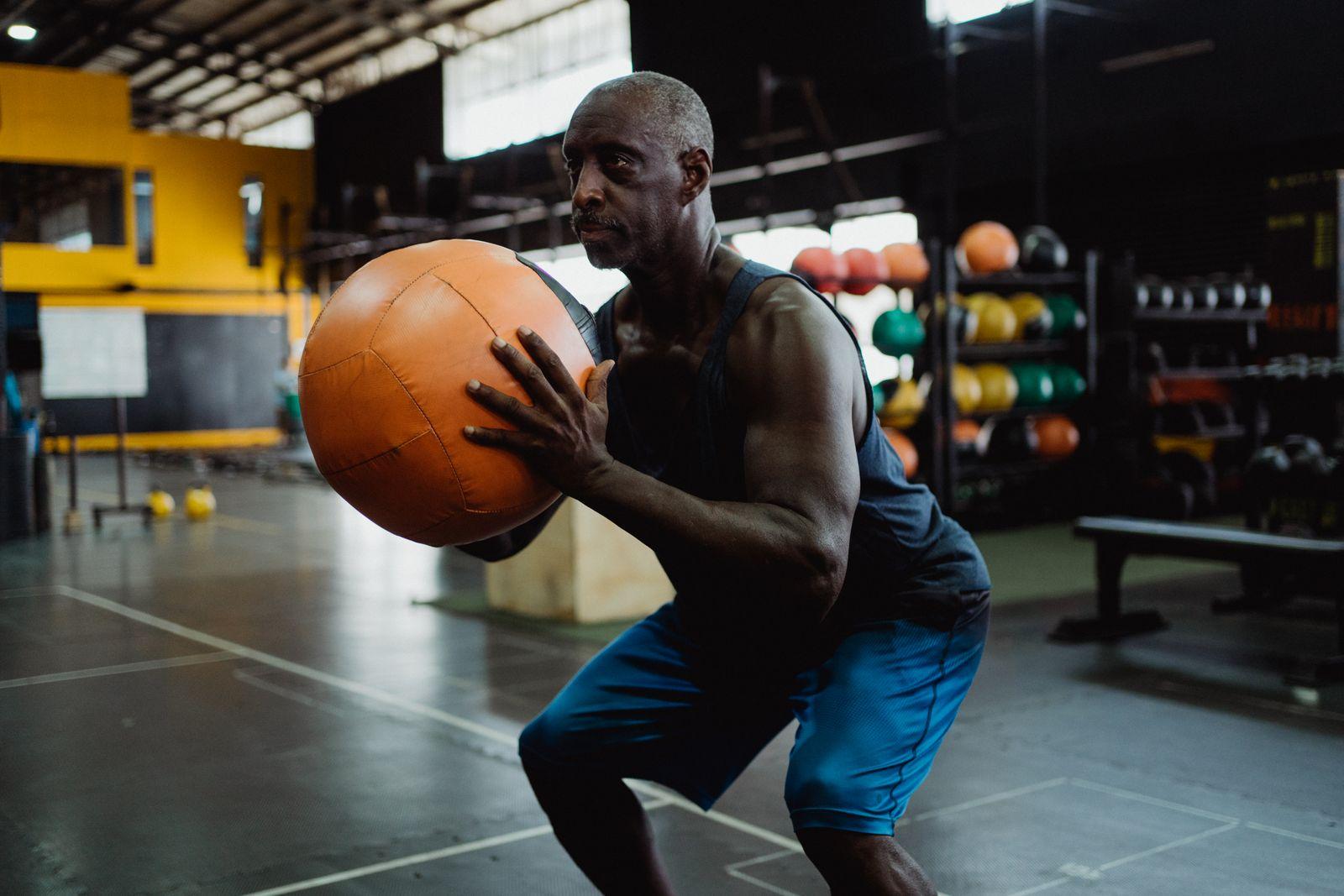
- Natural weights. For most of human history we lifted boulders and logs. Today, walk while carrying kettlebells or a medicine ball.
Variety may help you live longer
A January 2026 study in BMJ Medicine followed more than 111,000 adults for decades. The people who did the widest variety of physical activities had a 19% lower risk of death from any cause. It's an observational study, so it shows a link rather than proof, but the message is clear: if you play pickleball, walk, swim and do tai chi, you're likely better off than someone who only walks around the block.
Aerobic plus resistance training for blood pressure
New research suggests that combining aerobic exercise with resistance training may be the most effective way to lower blood pressure in older adults. That matters because high blood pressure drives strokes and heart attacks.
One practical tip: protect your feet so you keep moving. Choose shoes with real arch support, such as Brooks or Asics running shoes. Skip flats and flip-flops. Vans and high-tops are usually flat. You can add an arch-support insert, but a good insert can cost around $80, so it often makes sense to buy the right shoe first.
Flu season is here
The 2024–25 flu season killed nearly 300 children in the U.S., the most since the 2009–10 pandemic. The 2025–26 season was milder, with 179 pediatric deaths reported by early June 2026. About 85% of the eligible children who died were not fully vaccinated. People don't picture a 17-year-old dying of influenza, but it happens.
Getting a flu shot protects you and your community. I'm 65, so I'll get one of the vaccines preferred for older adults, such as Flublok. Ask your pharmacist; most insurance plans cover flu shots at no cost.
This fall's vaccines
This season's flu shots are already available, and so are the updated COVID vaccines. That includes Novavax's Nuvaxovid, a protein-based option: instead of mRNA, it delivers a lab-made version of the spike protein, the same basic approach as many traditional vaccines. Combination COVID-flu shots are in development. Years of data now show these vaccines reduce the risk of serious complications, especially for people over 65.
It's about community. As I said on air: it's not about me; it's about you.
Your coffee filter matters
Unfiltered coffee, such as French press and Turkish coffee, and to a lesser degree espresso, contains compounds called diterpenes (cafestol and kahweol) that raise LDL, the cholesterol you don't want higher. A regular paper filter traps most of them. If your LDL is a concern, switch to filtered coffee.
Listen and learn more
Listen to the full Sept. 28 episode on WMNF.
The Healthy Steps Show airs weekly on WMNF 88.5 FM in Tampa and streams everywhere at wmnf.org. Send your health questions in and join the conversation.
Sources
- Dietary sugar intake, genetic susceptibility, and risk of dementia, Journal of Prevention of Alzheimer's Disease, 2025
- Physical activity variety and mortality, BMJ Medicine, 2026
- Pediatric influenza deaths, 2024–25 season, CDC MMWR
- Berberine, Memorial Sloan Kettering Cancer Center
- Why Choosing to Stay In Can Be the Highest Form of Self-Care, Real Simple
This post is for education only and is not medical advice. Talk with your own clinician before starting a supplement, exercise program or vaccine.